Provider Innovations Driving Mobile Accessibility in Interactive Casino Games
Clara Krause · Oct 16, 2026
Provider Innovations Driving Mobile Accessibility in Interactive Casino Games
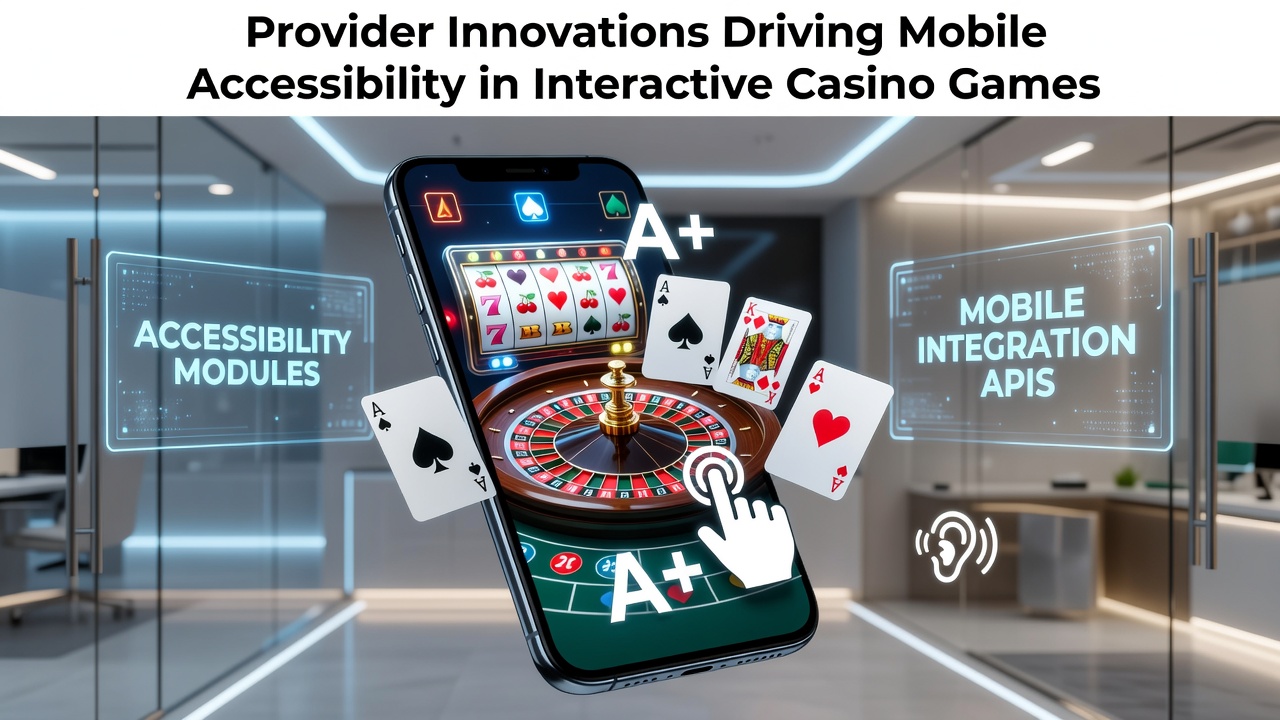
Software providers have shifted focus toward mobile platforms as player engagement patterns changed over recent years, and data from industry reports show that mobile devices now account for the majority of casino game sessions across multiple markets. Providers such as those developing slots, table games, and live dealer experiences have adopted HTML5 frameworks that replace older Flash technology, which allows seamless performance on smartphones and tablets without requiring downloads or plugins. These updates support faster loading times and maintain visual quality across varying screen sizes, while developers integrate device-specific features like gyroscope controls and haptic feedback to create more immersive interactions.
Adaptive Design and Cross-Platform Compatibility
Engineers at major studios have implemented responsive layouts that automatically adjust button sizes, paytable visibility, and reel configurations based on device orientation and screen resolution, and this approach reduces friction for users switching between portrait and landscape modes during gameplay. Research conducted by academic teams at institutions in North America indicates that such optimizations correlate with longer session durations on mobile compared to desktop access, since players encounter fewer interruptions from resizing or navigation issues. Providers continue to test games on a wide range of operating systems, including recent iOS and Android versions, to ensure consistent functionality and avoid compatibility gaps that could exclude segments of the audience.
Accessibility Features for Diverse Player Needs
Standards from organizations focused on digital inclusion have influenced how studios incorporate options such as adjustable text sizes, color contrast modes, and screen reader compatibility into casino titles. In October 2026, updates from several providers introduced voice command support for core functions like spinning reels or placing bets, which expands access for individuals with motor or visual impairments while complying with emerging regulatory expectations in regions like Canada and Australia. One study from a European research consortium found that these additions improved completion rates for game tutorials among users relying on assistive technologies, demonstrating measurable gains in usability metrics tracked through anonymized session data.
Integration with native mobile operating system tools, including dark mode support and gesture-based navigation, further aligns casino interfaces with user expectations shaped by everyday app interactions. Developers have also introduced customizable control schemes that let players remap actions or reduce on-screen clutter, which proves useful during extended play periods on smaller displays. Observers note that these refinements stem from iterative feedback loops where providers analyze aggregated usage statistics to identify pain points specific to handheld devices.
Performance Enhancements Through Emerging Technologies
Advancements in network infrastructure, particularly widespread 5G deployment, have enabled providers to deliver higher-fidelity graphics and real-time multiplayer elements without latency spikes that previously disrupted mobile sessions. Companies specializing in live casino content have optimized video streams for variable bandwidth conditions, automatically scaling quality to maintain smooth dealer interactions even when signal strength fluctuates. Data compiled by gaming trade groups in the United States reveals that such technical upgrades have contributed to increased adoption of mobile live dealer formats in markets where connectivity infrastructure supports them reliably.
Cloud-based rendering techniques allow complex animations and particle effects to process on remote servers rather than taxing device hardware directly, which extends battery life and keeps temperatures manageable during longer play intervals. This method supports broader device compatibility, including older smartphones that might otherwise struggle with resource-intensive titles. Providers have paired these backend improvements with progressive web app capabilities that enable instant access through browsers while retaining features traditionally associated with native applications.
Regulatory Alignment and Industry Standards
Compliance teams within provider organizations work closely with oversight bodies across different jurisdictions to embed accessibility requirements into development pipelines from the outset, and this proactive stance helps avoid costly retrofits after initial releases. Guidelines issued by authorities in Australia and select EU member states emphasize equal access considerations, prompting studios to conduct audits that verify compliance with established web content accessibility benchmarks adapted for gaming contexts. Figures from industry associations indicate that companies investing early in these areas have seen smoother approval processes for new mobile titles in multiple territories.
Collaboration between providers and device manufacturers has produced testing protocols that simulate real-world usage scenarios, including one-handed operation and low-light environments common during commute or evening play. These efforts reflect a broader trend where technical innovation intersects with inclusive design principles to address the needs of a growing mobile-first player base.
Conclusion
Continued evolution in provider technology has positioned mobile accessibility as a core development priority rather than an afterthought, and ongoing refinements in interface design, performance optimization, and assistive features continue to shape how interactive casino games reach wider audiences. As network capabilities advance and regulatory frameworks evolve, the focus on seamless mobile experiences shows no signs of diminishing among studios committed to broad compatibility and user-centered updates.